
A strange procession

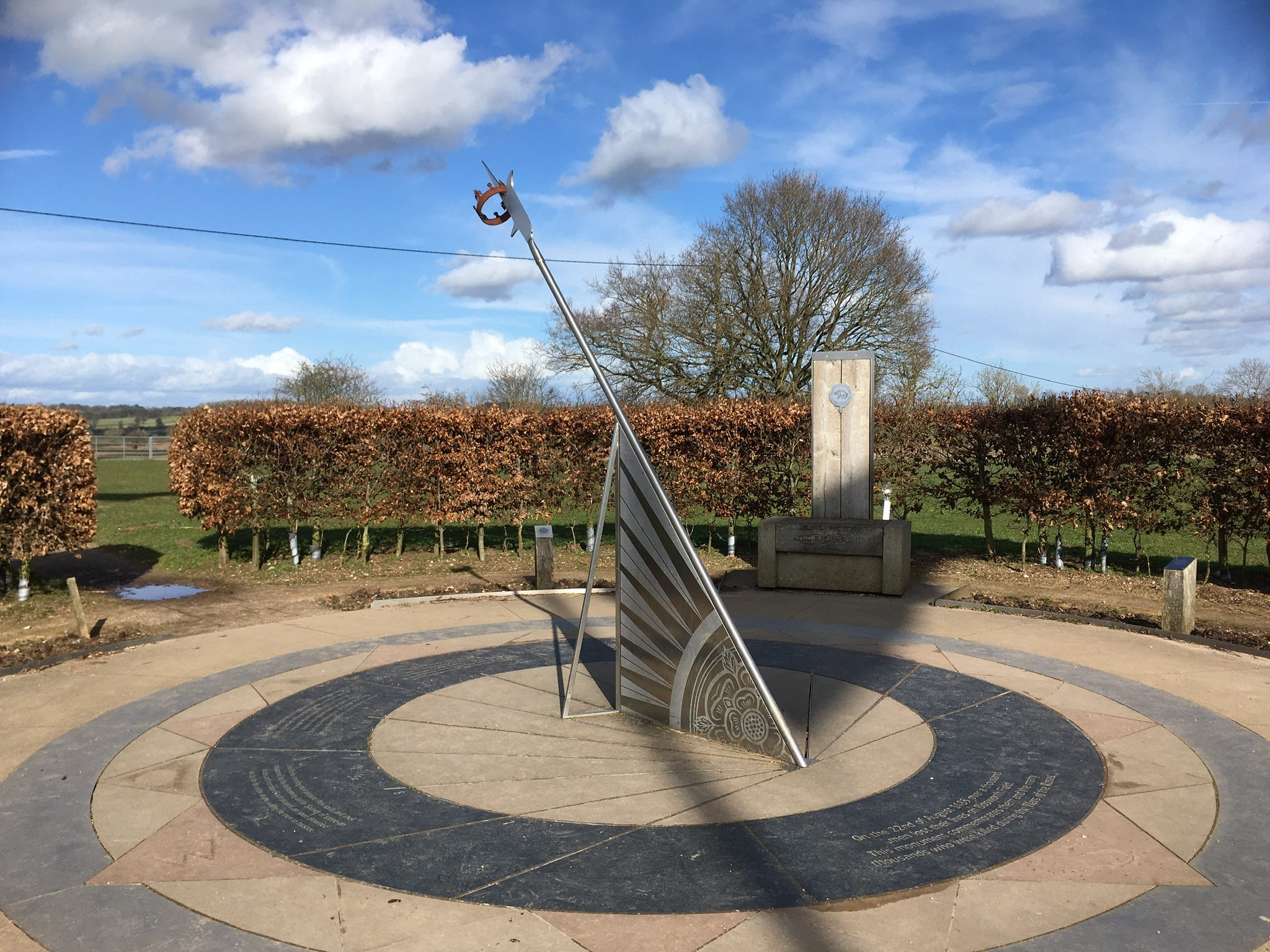
Ten years ago today, 22nd March 2015, we took the kids and a friend to watch a funeral procession. That’s not how we thought of it of course: Richard III’s final journey was an historic event, starting at the University, where he had been staying for a few years, then round the old haunts of west Leicestershire (including Fenn Lane Farm where he is thought to have died, and the Bosworth Battlefield Heritage Centre), and ending by processing through the streets of the city to the Cathedral. It was unlike anything we would ever have the chance to see again, and something that the kids (and we) would want to see and remember.
I think I was expecting a fun day out, a carnival even. There was certainly a sense of occasion - we were handed guides to the event when we got to the station, and joined throngs walking to the city centre. We arrived early and stood at the front of the crowd right by the railings, a little down the High Street from the Clocktower. From there we could see a large screen which showed pictures from the air as the cortège approached the city: it travelled over the Bow Bridge (across which Richard had ridden to his last battle) and stopped at St Nicholas’s church for a short service.
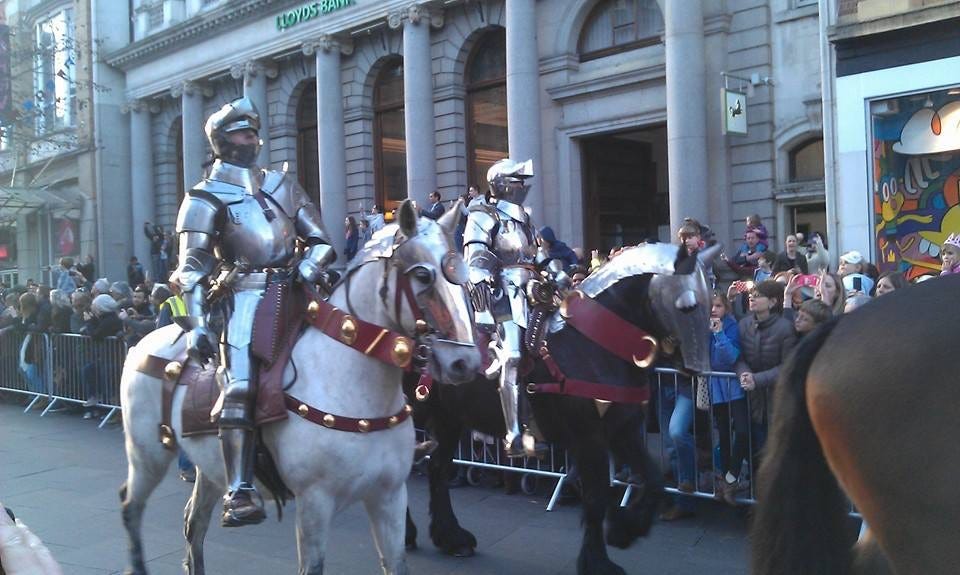
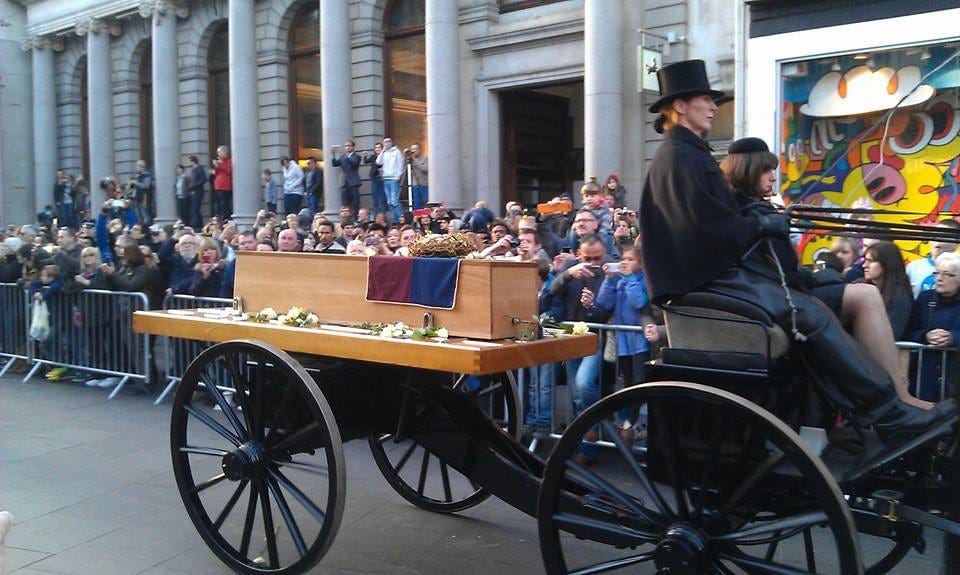
Then Richard was transferred from his unremarkable motor hearse to one pulled by horses: down the High Street, behind a police motorbike, rode knights in full armour (if you know Monty Python it’s quite hard to take knights in armour seriously, alas); and then came the small, sad coffin1, made of English oak and yew by a distant relative of Richard’s, strewn with white roses; and it was when I saw that, as the March afternoon chilled in the shade, that it hit me that this was serious and strange and oddly moving.
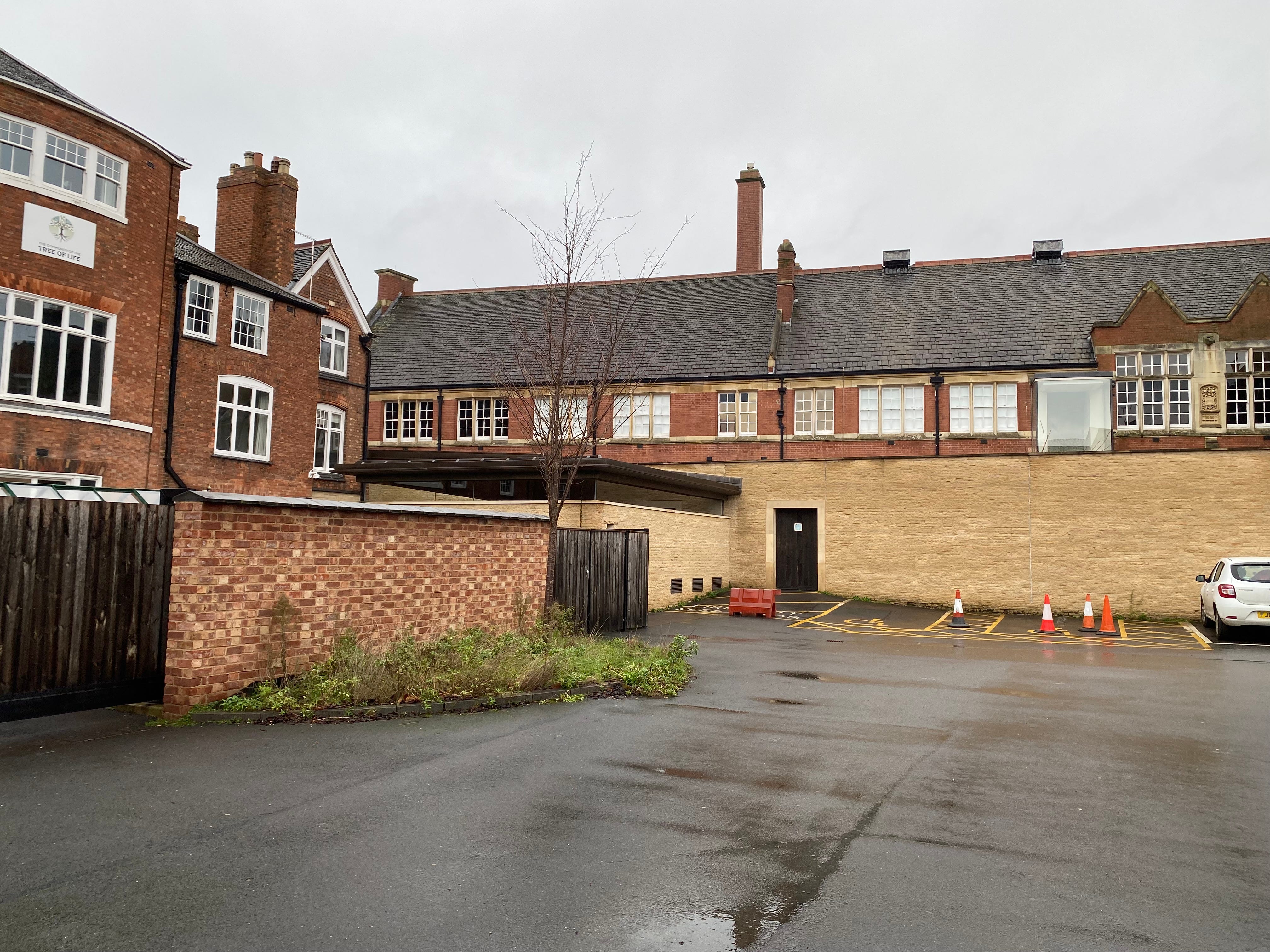
Not that anyone could really feel sad about the death of anyone born over 560 years earlier; particularly as Richard III was not a sympathetic figure - Shakespeare may have portrayed him unfairly, but his summary execution of William Hastings at the Tower of London in the summer of 1483, shortly before he became king, showed that Richard was as brutal as the next medieval monarch. And yes, he did have the Princes in the Tower killed, almost certainly. He chose to fight Henry Tudor at Bosworth and was eventually outnumbered, and - leading his troops from the front - paid the ultimate price, slain by a great blow to the head from a halberd2. Then his body was slung over a horse, taken to Leicester and put on public display before being buried in the Greyfriars Priory, which was destroyed half a century later by the son of his Tudor nemesis. And so he ended up, undignified, under a council car-park.
You can know all that, yet still that little lonely coffin, almost pathetic, being carried incongruously past Lloyd’s Bank and Urban Outfitters, was a stark reminder that the king was in the end just a mortal, with nothing grand about his ancient bones. We watched him pass solemnly, then took a shortcut to Pocklington’s Walk and saw the procession again as it neared the end of its journey. Ricardians in the crowd were throwing white roses onto the hearse with a striking intensity I couldn’t (and can’t) make sense of.
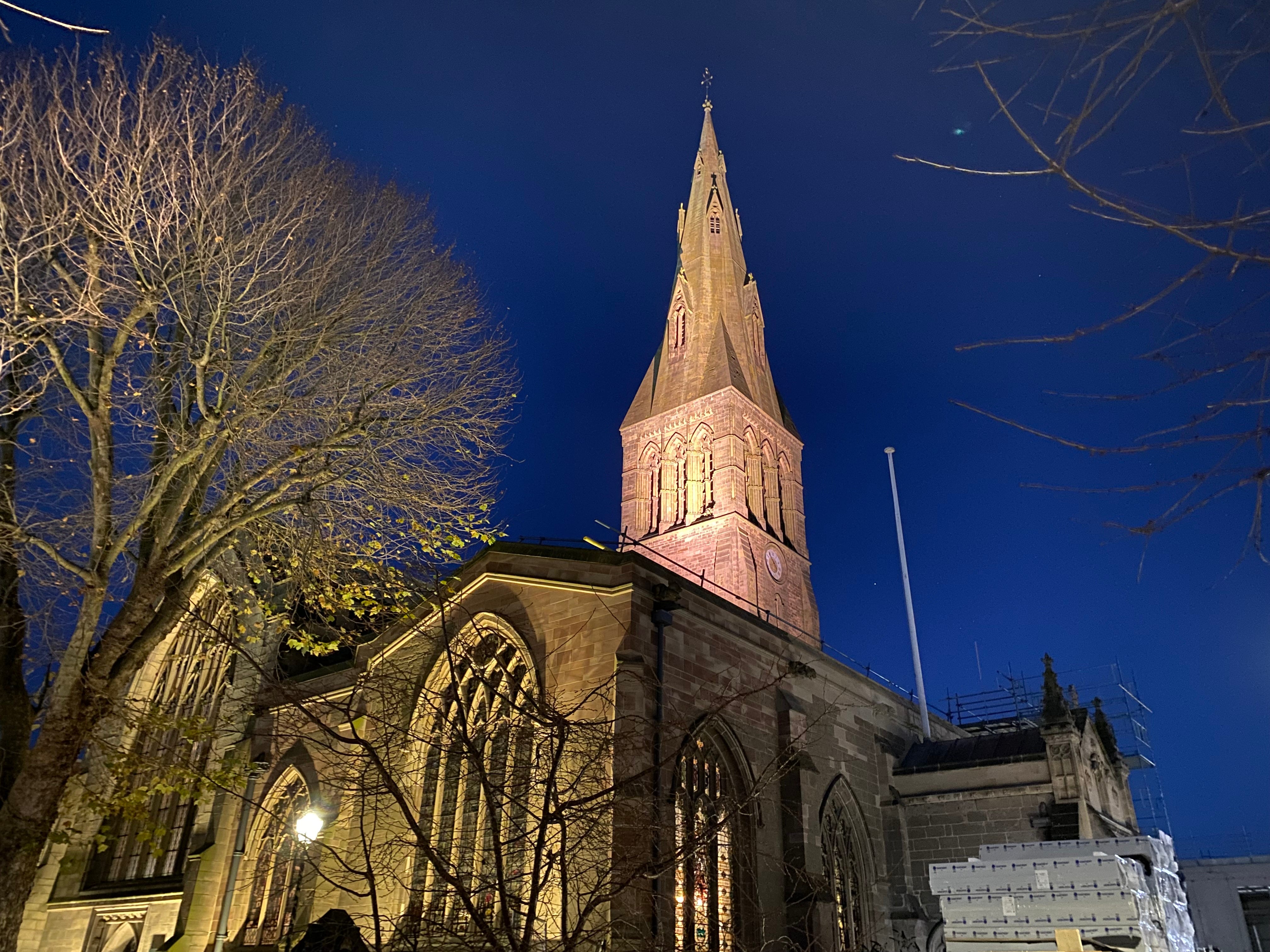
We were stopped by a young journalist from the Leicester Mercury and did a short interview, saying some rather mundane things - because what could you say about being there, beyond wanting to witness an extraordinary piece of history3?. And then Richard went home at last to the Cathedral (which he would have known, in much smaller form, as a parish church - he stayed at the nearby Blue Boar inn, long since demolished, the night before Bosworth). And we went home too.
The coffin lay in repose in the Cathedral for the next three days, and large numbers of people queued round the streets of Leicester to pay their respects, a pre-echo of the much longer queues to pay respects to Queen Elizabeth II at Westminster Hall 7½ years later. On the following Thursday Richard’s reburial service, based on a medieval rite, was shown live on television.
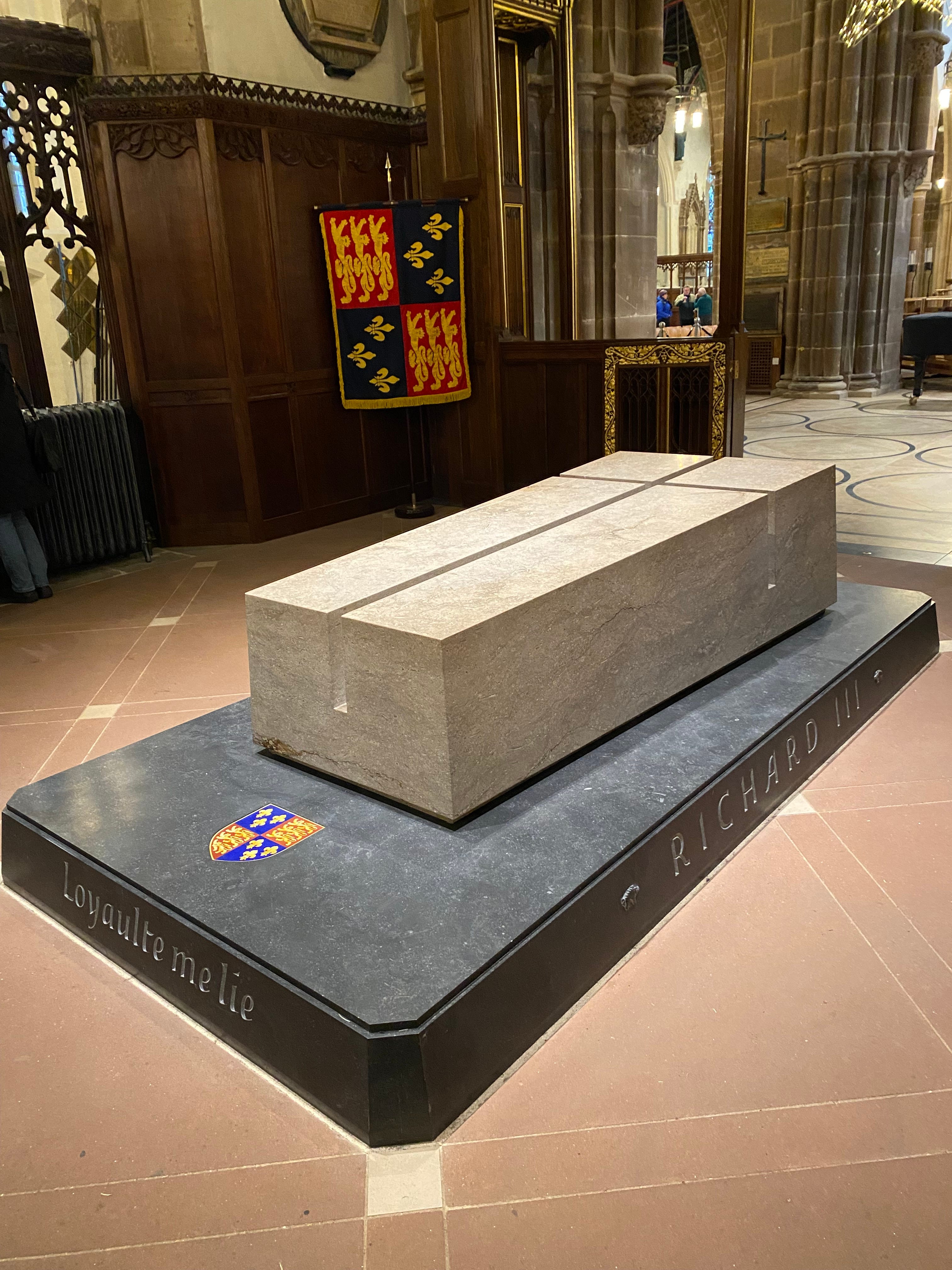
Benedict Cumberbatch (Richard’s third cousin sixteen times removed) read a poem by the then poet laureate, Carol Ann Duffy. The tomb, made of Swaledale fossil stone quarried (appropriately) in North Yorkshire4, sitting on a Kilkenny marble plinth, was unveiled to the public the following day - I was not patient enough to queue to see it at the time (I went a couple of weeks later when it still had the pall and crown on it; here it is some years later).
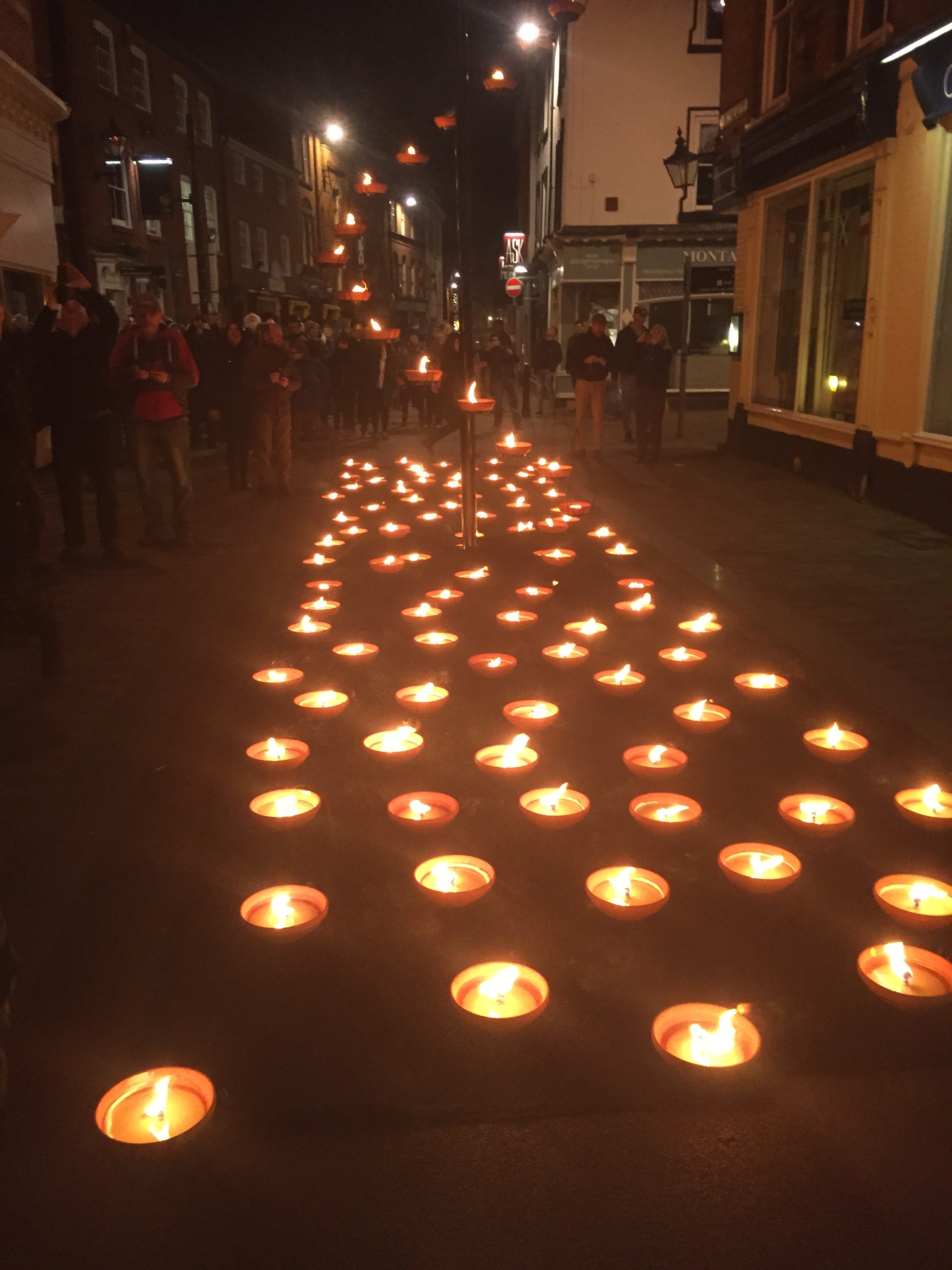
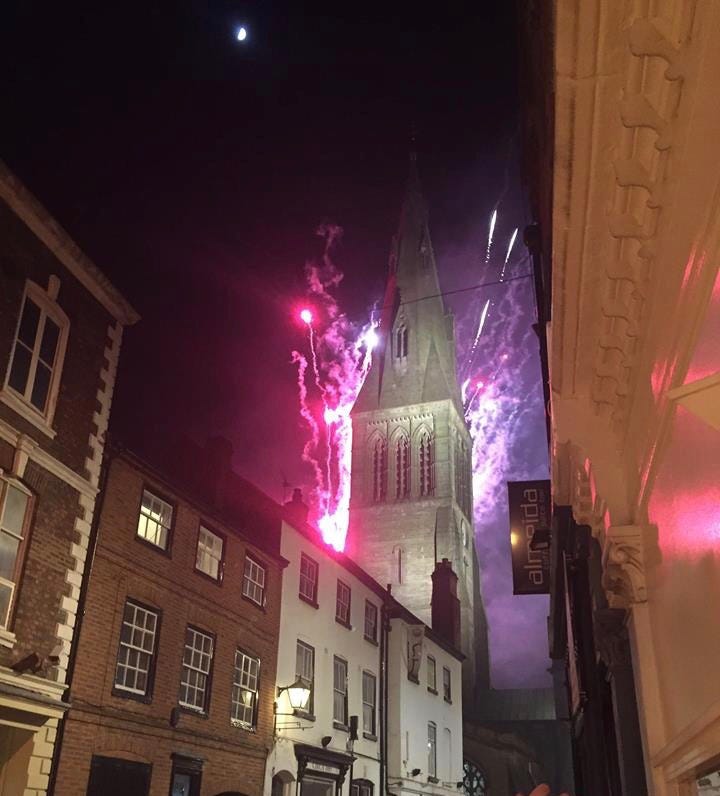
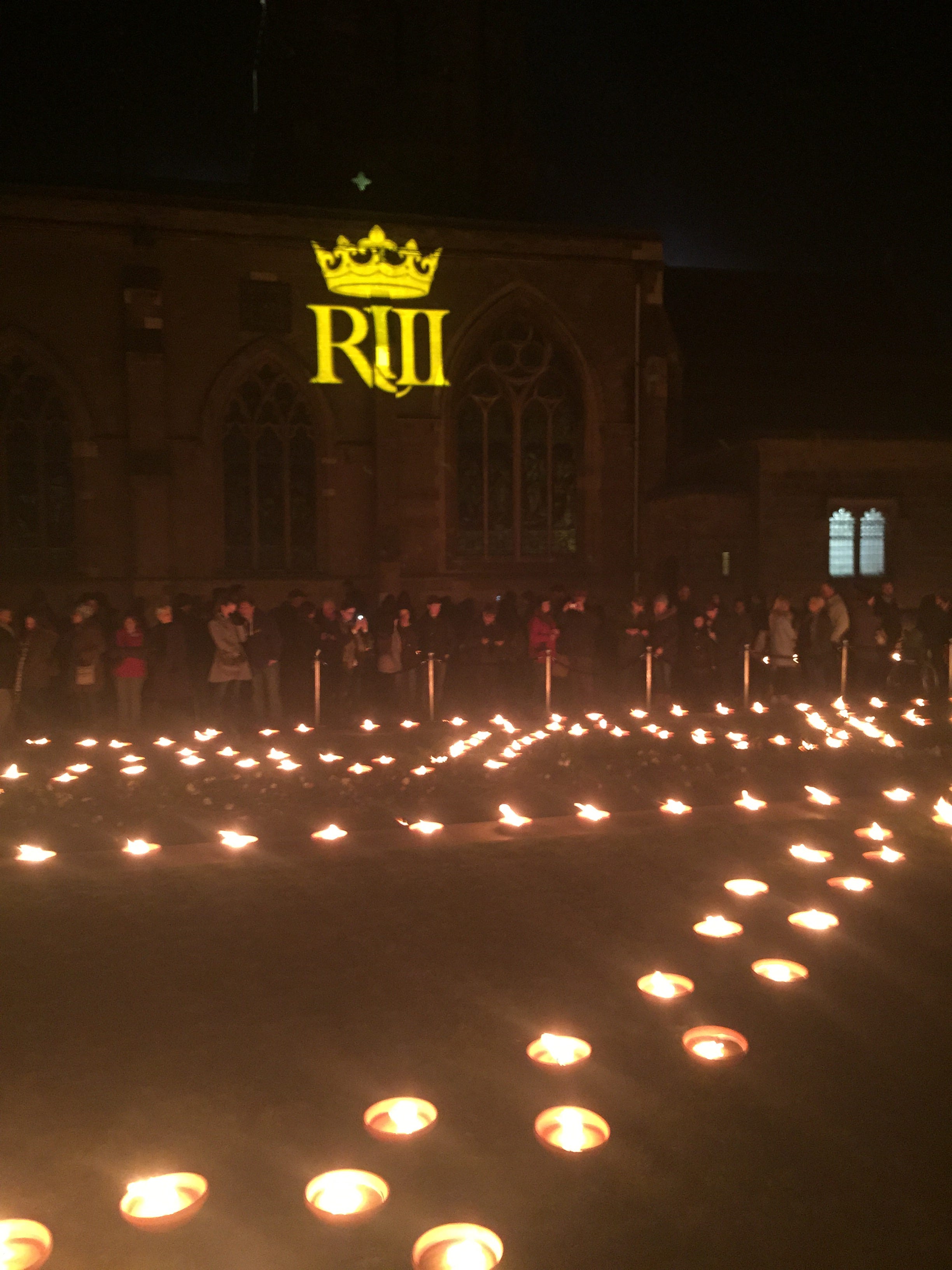
We went back to Leicester that Friday evening to enjoy the fireworks and join the crowds slowly walking around admiring the great candles, commemorating the end of a unique, remarkable week when Leicester found itself, unfamiliarly, at the centre of the world’s attention5.
Though not, as it transpired, for the last time: it is of course a complete, though striking, coincidence - surely no one thinks otherwise, do they6…? - that Leicester City FC, nailed to the bottom of the Premier League table on the day that Richard was buried having lost 19 of 29 league matches that season, proceeded to go on an extraordinary run that saw them lose only four of the following 47 games, to not only avoid relegation but win the Premier League title just over a year later.
But that, of course, is another story.
The piece doesn’t appear to be online any longer, which is no real loss to the world of journalism.
Except perhaps Michael Morpurgo.
Yet another well-written, very interesting article.
Didn’t live in Leicester but was visiting that Saturday of the car park dig. Had heard about it so was watching through the gate. R had been found - but didn’t know it till later! Wonderful.